





Stay close to the action & subscribe to our Newsletter.

Which tire is the fastest?
'Pirelli P ZERO Race TLR SL-R' vs
'Continental GP5000 TT TR'
The fastest tire is not the one with the lowest theoretical values.
A tire must be evaluated as part of the "wheel–tire–rider" system. Aerodynamic drag and rolling resistance matter, but so do pressure, control, grip, puncture resilience, and the probability of finishing a ride, race, or event without failure.

Which is actually faster?
Tyres are among the most influential components on a bicycle. They are the only parts connecting the rider, bike, and road, yet they are often selected by using one headline number: rolling resistance. That number matters, but it is not the whole answer. A tire changes the way air meets the front wheel; its pressure changes casing deformation, vibration, and grip. Its construction influences puncture risk, confidence, and fatigue. The fastest tire in a controlled test can therefore be slower for a particular rider, road surface, or event.

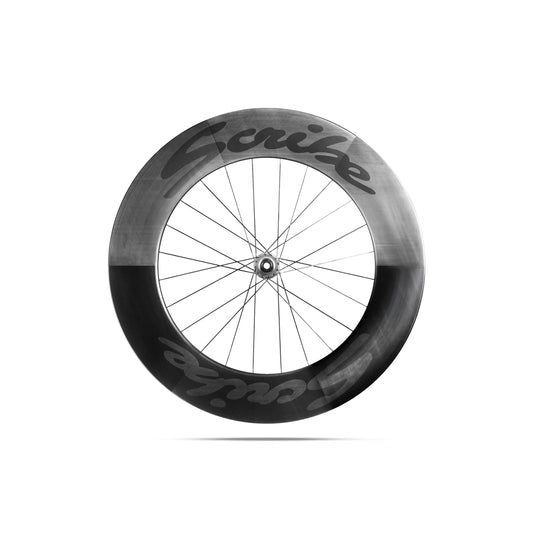
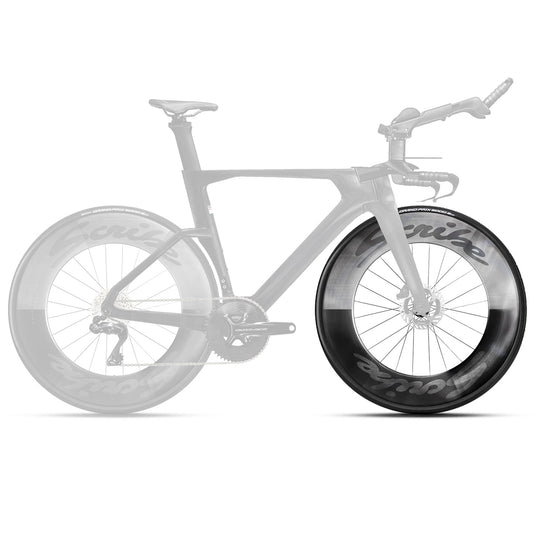
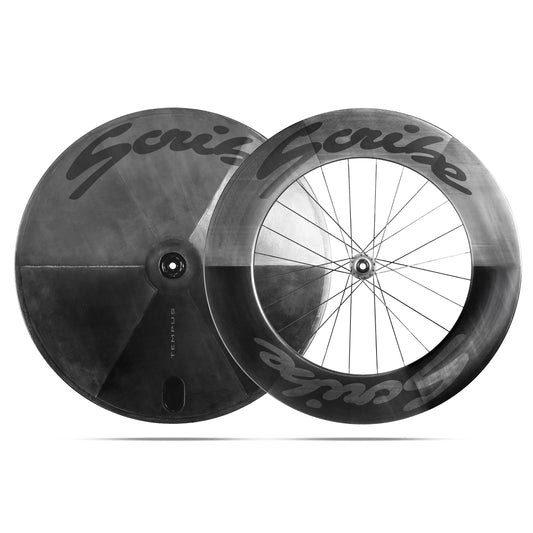
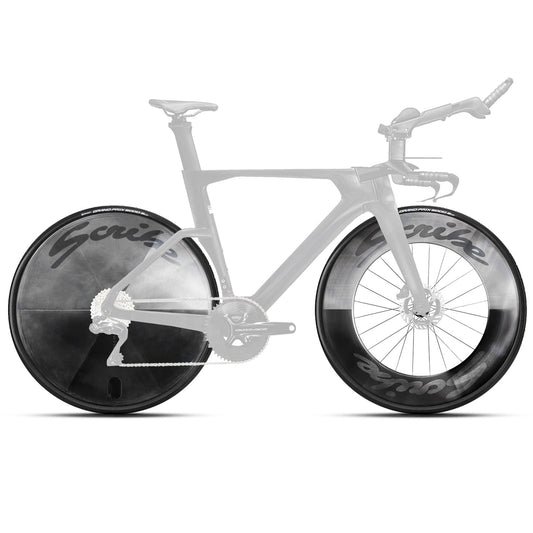
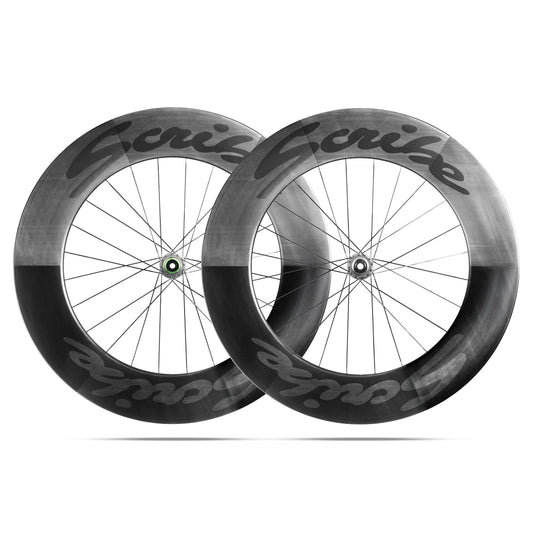
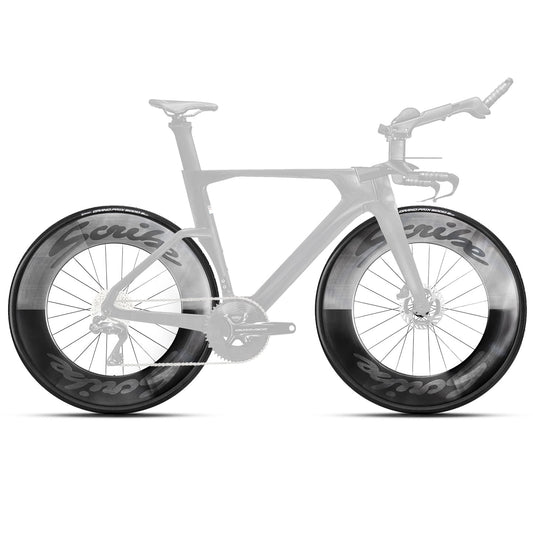
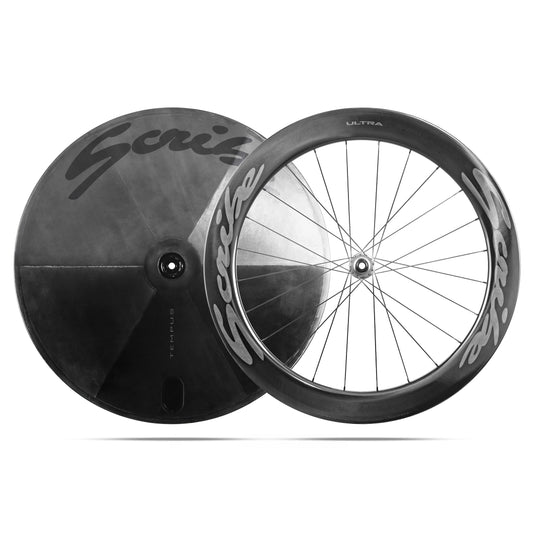
As part of our AVP, we tested the Pirelli P ZERO Race TLR SL-R and Continental Grand Prix 5000 TT TR on our Tempus ULTRA 100 Front to examine the aerodynamic performance of the "system." Initially, the results got us excited; a new tire with aerodynamic performance gains that could make the difference, but when evaluated as a system, we questioned whether it was worth the risk.
What are we comparing?
Pirelli positions the P ZERO Race TLR SL-R as its fastest race tire. The 28mm version is listed at 275g, with a 120 TPI LiteCORE casing, SmartEVO2 compound, and its PAAS aerodynamic surface treatment. Available currently in only 28mm & 30mm. We acknowledge there are other tyres on the market, with aero offerings in many sizes. We've tested them all, but for the purpose of this lite blog, we are comparing two tyres.

The GP5000 TT TR is the most performance-focused tubeless tir in Continental’s GP5000 range. Developed specifically for time trials, it uses a lightweight 220 TPI casing, Continental’s BlackChili compound, and a Vectran puncture-protection belt. At a claimed 245 grams in the 28 mm size, it strips away some of the durability and sidewall protection of the GP5000 S TR to prioritise low weight, low rolling resistance, and a supple ride.

|
Attribute (28mm) |
Pirelli P ZERO Race TLR SL-R |
Continental GP5000 TT TR |
|---|---|---|
|
Design intent |
For Race Only—Aero shaping |
Fast Race Only variant |
|
Construction |
120 TPI LiteCORE, SmartEVO, PAAS |
2/110 TPI casing, BlackChili, |
|
Claimed / Actual Mass |
275 g / 282g |
245g / 253g |
|
Measured Width |
28mm |
29mm |
|
Evidence maturity |
New product; Scribe aero result plus manufacturer claims |
Long-established product with a larger independent evidence base |
ㅤ
ㅤ
Tire speed has two principal components
1. Rolling Resistance
As a loaded tire rotates, its casing and tread continually deform. Rubber and casing materials do not return every joule used in that deformation; some energy is dissipated as heat. The associated power loss can be approximated by:
Pᵣᵣ = Cᵣᵣ × m × g × v
Rolling-resistance power therefore rises approximately in direct proportion to speed, total system mass, and the tire's coefficient of rolling resistance. Laboratory drum tests are useful for controlled comparison, but their absolute numbers depend on load, pressure, speed, drum texture, tire preparation, and test protocol.

ㅤ
At equal construction and load, pressure reduces casing deformation up to a point. On a real road, however, excessive pressure increases vibration and causes the bike and rider to move vertically over surface irregularities. That energy is not free. The optimum is the pressure that minimises the combined casing and impedance losses while preserving grip and control, not the highest pressure printed on the sidewall.
With that said, the resultant Cᵣᵣ needs to be considered and balanced with the aerodynamic properties of the tire, along with puncture resistance, to achieve the optimum set-up for you.

ㅤ
ㅤ
2. Aerodynamic drag
Aerodynamic power rises with the cube of air speed:
Pₐₑᵣₒ = ½ × ρ × CᴅA × v³
The front tire is the leading edge of the wheel system. Its measured width, shape, sidewall texture, and transition into the rim influence flow attachment and separation. A tire that is excellent aerodynamically on one rim is not automatically excellent on another—which is why, through our AVP process and wheel development, we select tires optimised for the wheel/rim application.

Within the most relevant real-world yaw range of −5° to +5°, the Pirelli produced the lower average aerodynamic drag when paired with the Tempus 100, delivering a saving of 1.35 watts at 50 km/h. At 0° yaw, the difference was 1.36 watts, with the advantage remaining relatively consistent throughout this low-yaw range. Larger differences occurred at higher yaw angles, but these conditions are less frequently experienced at typical racing speeds. This is a wheel-specific result and should not be interpreted as evidence that either tire is universally more aerodynamic across every wheel platform.
Pressure: The number that can reverse the result
Pressure affects more than comfort. It changes the tire's loaded shape, measured width, and frontal profile; it can therefore affect both rolling resistance and aerodynamics. It also changes the size of the contact patch, available grip, and the tire's ability to follow rough surfaces. A practical starting pressure should account for:
|
⚖️ System Mass Total system mass (Rider + Bike + Kit) combined with front/rear weight distribution. |
📏 Effective Width Actual inflated tire width rather than nominal sidewall labeling. |
|
🌧️ Environment Surface roughness, terrain type, temperature, and weather conditions. |
🚴 Rider Dynamics Skill level, cornering confidence, and tolerance for vibration. |
ㅤ
ㅤ
For many riders, the fastest adjustment is not changing the tire brand but reducing an unnecessarily high pressure. A larger contact patch can improve speed over rougher surfaces while reducing fatigue and making the bike easier to control. To keep things simple, we recommend online calculators from the likes of Silca. Guessing can be incredibly detrimental, with a 5psi error outside the “optimal” figure causing watts of damage (more of that to come in a future entry).
ㅤ
ㅤ
Case studies: What does a few watts mean?
The table below converts a net tire-system saving into an indicative time gain. It is not a prediction for every course: it assumes a flat course, still-air equivalent conditions, constant power, and no interruption. The 40 km example uses approximately 45 km/h and 300 W; the 180 km example uses approximately 36 km/h and 200 W. Around these operating points, one watt is worth roughly 3.8 seconds over 40 km and 27 seconds over 180 km.
|
Net system saving |
40 km TT (~53 min) |
180 km triathlon bike leg (~5 h) |
|
1 W |
~4 seconds |
~27 seconds |
|
2 W |
~8 seconds |
~53 seconds |
|
4 W |
~15 seconds |
~1 min 47 sec |
|
6 W |
~23 seconds |
~2 min 40 sec |
These examples illustrate why small savings matter more over long durations but also why robustness matters more. One stop to repair a puncture can erase several watts of theoretical advantage many times over.
ㅤ
ㅤ
Fastest in the lab vs Fastest to the finish
A race tire is an optimisation, not magic. Reducing casing thickness can improve speed and ride quality, but every design must allocate material between efficiency, support, and protection. The relevant question is not simply ‘Which tyre is fastest?’ It is ‘Which tyre gives this rider the highest probability of completing this course quickly?’

This can be evaluated using BRR (Bicycle Rolling Resistance) Total Puncture Score (TPS)—From the illustration below, we can see that the lower TPS score on both the sidewall and tread of the Continental tire means the tire, in theory, will be less resilient and the probability of a puncture is higher. A small element of this may indicate that the Pirelli tire could potentially wear & last longer, given its resilience to cuts, tears, and wear. In practice. However, through road tests, our findings have differed from the lab tests with the Pirelli tire exhibiting wear quicker with visible cuts resulting in pressure loss on two occasions during a 8 week test period.

For an experienced time-trialist on clean roads, or a rider supported by a follow car, willing to accept more risk, even a small aero or rolling advantage may justify a race-only setup. For a first-time triathlete, recreational rider, or unsupported long-course competitor, predictable installation, familiar handling, and proven durability may be worth more than a marginal efficiency gain.
The Engineers' Recommendation: Use the P ZERO Race TLR SL-R as a priority-event option where its measured Tempus 100 aerodynamic advantage is relevant, and the rider accepts the trade-offs of a specialised race product. The GP5000 TT TR remains the more conservative default for riders wanting one proven tire for training and racing. Reassess this position as independent SL-R wear and puncture data accumulate.
ㅤ
ㅤ
A smarter mixed setup?
Because the front tire meets relatively clean airflow, it usually has greater aerodynamic influence. The rear tire sits in the disturbed flow of the frame and rider and carries more load. A race-focused 28mm front paired with a larger volume rear can be a rational compromise, prioritising aerodynamic shape at the front, where it matters, with comfort and grip in the form of additional volume in the shape of a 30mm tire on the rear.

This should still be tested as a system and not assumed to be faster. Mixing tires can alter grip balance, pressure requirements, and handling, something felt by riders depending on the bike and application.
ㅤ
ㅤ
Our Conclusion?
Tyre performance is a system problem. Rolling resistance determines how much energy is lost in deformation. Aerodynamics determines how cleanly the wheel–tire shape moves through the air. Pressure influences both while also governing grip, vibration, and control. Our Tempus 100 data can identify the more aerodynamic pairing under controlled conditions. It cannot, by itself, decide which tire will be fastest for every rider. The final answer depends on speed, surface, skill, event length, support, and tolerance for risk.
For some riders, the P ZERO Race TLR SL-R may be the right race-day optimisation. For the majority of riders, we’d recommend the GP5000 TT TR—the small variance in aerodynamic performance, factoring in the small CRR difference, has us swaying towards the robustness of the Continental tire.
Remember—the fastest setup is the one that converts the most of your effort into forward motion and gets you to the finish without compromise.